
Foreign Direct Investment in Bangladesh: A Complete Guide for International Investors
Bangladesh has become one of South Asia’s most closely watched investment destinations. A young workforce, a fast-growing domestic market, and a government actively rewriting its investment rulebook have combined to make foreign direct investment (FDI) in Bangladesh a live conversation in boardrooms from Singapore to London. But turning interest into an operating company on the ground still means navigating a regulatory system that is modernizing quickly — and changing as it does. This guide walks through what foreign investors need to know before committing capital to Bangladesh, and where they typically need expert support.
Why Investors Are Looking at Bangladesh

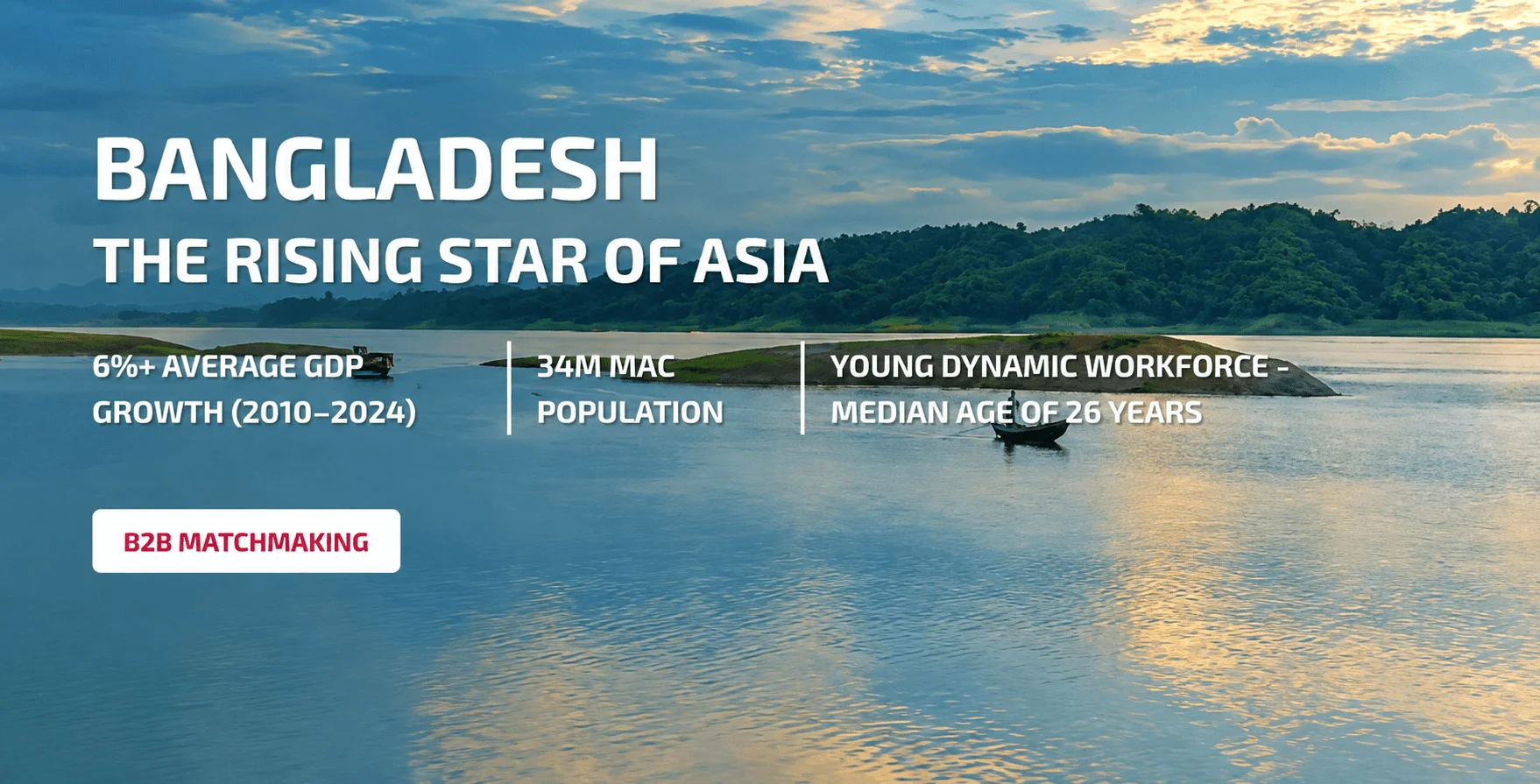
Bangladesh offers a combination that is increasingly rare: a market of over 170 million people, competitive labour costs, preferential trade access in key export markets, and a government explicitly courting foreign capital. Recent policy moves reinforce that direction — the government has continued to expand duty-free market access agreements with trading partners, and financial-sector reforms backed by international lenders are aimed at strengthening the banking system that foreign investors will rely on to move capital in and out of the country.
For manufacturers, the country’s export-processing zones and economic zones offer additional tax and duty incentives. For services and technology companies, growing digital infrastructure and a large pool of young, English-capable talent make Bangladesh an increasingly credible base for regional operations, not just a low-cost manufacturing hub.
The Legal Framework Governing FDI
Foreign investment in Bangladesh sits on a layered legal foundation. At its core is the Foreign Private Investment (Promotion & Protection) Act, 1980, which provides statutory guarantees around equal treatment, protection from expropriation, and repatriation of profits and capital for foreign investors. Sitting alongside it is the Foreign Exchange Regulation Act, 1947, which governs how foreign currency enters and leaves the country and gives Bangladesh Bank oversight of cross-border capital movements.
The central coordinating body for most of this activity is the Bangladesh Investment Development Authority (BIDA), which operates under the government’s direct oversight and is responsible for registering foreign, joint-venture, and local investment projects, approving branch and liaison offices, and issuing work permits for foreign staff. Notably, the regulatory landscape itself is in motion: the government has moved forward with legislation to consolidate BIDA, the Bangladesh Economic Zones Authority (BEZA), the Public-Private Partnership Authority, and the One Stop Service Act under a single new investment agency, with the stated goal of standardizing approval timelines and unifying licensing, registration, and incentive administration under one digital platform. For investors, this means the fastest-changing part of doing business in Bangladesh right now is not the opportunity — it’s the process.
How BIDA's One-Stop Service Works
BIDA’s One-Stop Service (OSS) is the practical entry point for most foreign investors. The platform has been built to integrate dozens of government agencies, banks, and chamber associations into a single digital window, replacing what used to be a long sequence of separate office visits. Through OSS, investors can apply for BIDA registration, track approvals, and access a growing list of related government-to-business services without physically visiting each authority.
That said, “one-stop” does not mean “one-step.” A typical foreign investment still follows a defined sequence: securing BIDA’s initial approval, opening a corporate bank account and bringing in the required minimum foreign exchange, notifying Bangladesh Bank of the inbound investment within the prescribed window, obtaining a Tax Identification Number, filing with the Registrar of Joint Stock Companies and Firms (RJSC), and securing a trade license. Missing a step, or completing it out of sequence, is one of the most common causes of delay for first-time investors — and one of the easiest problems to avoid with the right advisory support from the outset.
Common Structures for Foreign Investment
Foreign investors entering Bangladesh generally choose from a handful of structures, each suited to a different stage of market entry:
- Private limited company (wholly foreign-owned or joint venture): the most common vehicle for investors planning full-scale operations, local hiring, and revenue generation in Bangladesh.
- Private limited company (wholly foreign-owned or joint venture): the most common vehicle for investors planning full-scale operations, local hiring, and revenue generation in Bangladesh.
- Liaison office: appropriate for companies that want a representative presence — market research, coordination, liaison with local partners — without directly generating local revenue.
- Joint venture: often the preferred route in regulated or strategically sensitive sectors, or where a foreign investor wants to pair capital and technology with a local partner's market knowledge and relationships.
Choosing the right structure has downstream consequences for taxation, repatriation, licensing, and how quickly the business can actually start operating — which is why investment structuring is typically one of the first conversations a foreign investor should have, well before incorporation documents are drafted.
Key Compliance Steps After Approval
Securing BIDA approval is the beginning of the compliance journey, not the end of it. Within a defined period after approval, investors are generally required to bring in a minimum threshold of foreign exchange through a Bangladeshi bank account and formally notify Bangladesh Bank of the investment under the Foreign Exchange Regulation Act. Company registration with RJSC, obtaining statutory certificates, and securing sector-specific licenses typically follow in parallel. For regulated industries, additional approvals from sector regulators may be required before the business can begin operating.
Because these steps sit across multiple government bodies and follow strict statutory deadlines, foreign investors — particularly those managing entry remotely — often find that the administrative sequencing is more demanding than the underlying paperwork itself.
How IncorpLegal Supports Foreign Investors
IncorpLegal works with foreign investors across the full market-entry journey — from initial market entry strategy and FDI advisory through investment structuring, BIDA registration and approvals, foreign ownership advisory, joint venture structuring, and banking and foreign exchange compliance. Because the regulatory environment is actively being restructured, working with advisors who track these changes in real time — rather than relying on a static checklist — meaningfully reduces the risk of delay.
Final Thoughts
Bangladesh’s fundamentals continue to attract global capital, and the government’s own reforms suggest the compliance journey should get faster, not slower, in the years ahead. But for now, foreign investors succeed in Bangladesh by treating market entry as a sequenced legal and regulatory process, not a single registration event. Getting the structure, the BIDA approval, and the banking and compliance steps right from day one is what turns investment interest into an operating business on the ground.
Considering an investment in Bangladesh? IncorpLegal’s Foreign Investment & Market Entry team can help you assess the right structure and manage the full BIDA and regulatory approval process from start to finish.

Md. Akber Hossain Khan, FCA
A Fellow Chartered Accountant (Bangladesh) and alumnus of the National University of Singapore (NUS), Khan's practice focuses on inbound foreign investment and supporting businesses in global expansion. He is deeply experienced in FDI, cross-border accounting BPO, audit, taxation, and corporate financial advisory.

Business Expansion & Corporate Advisory. Precision in Strategy, Excellence in Execution. Your gateway to Asia.
Services
Quick Links
Get In Touch
IncorpLegal, 2nd Floor, Venus Complex, Kha-199/3-4, Pragati Sarani, Middle Badda, Dhaka-1212, Bangladesh.
- Email: hello@incorplegal.com
- Phone: +880-1713143224
- Hours: Mon-Fri 9:00AM - 5:00PM
©2026 Incorp Legal All Rights Reserved